Our nervous system is constantly responding to what is happening around us and within us. At times, we may feel calm, connected and present. At other times, we might experience anxiety, irritability, restlessness, overwhelm or a sense of shutting down.
Understanding our nervous system can help us recognise these responses with greater compassion, rather than judging ourselves for them.
What is Polyvagal Theory?
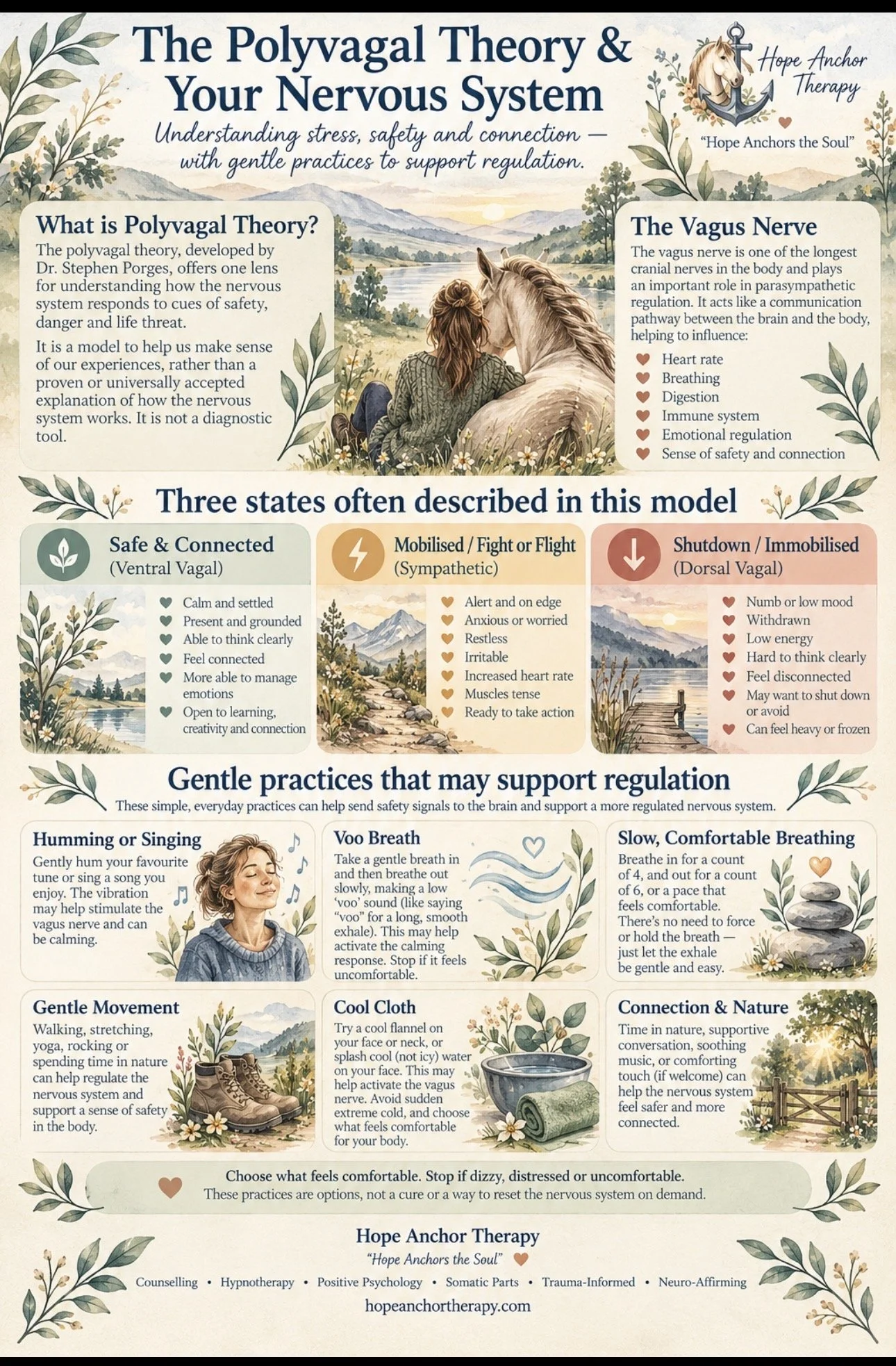
Polyvagal Theory, developed by Dr Stephen Porges, offers one framework for understanding how our autonomic nervous system responds to cues of safety, danger and threat. It explores the relationship between our physiological state, our emotions and our experiences of connection.
It is one way of understanding our responses, rather than a complete or universally accepted explanation of how the nervous system works.
The role of the vagus nerve
The vagus nerve is an important part of the parasympathetic nervous system. It helps regulate functions including heart rate, digestion and aspects of breathing. Gentle activities involving breathing, voice, movement and social connection may help some people feel calmer and more grounded.
Gentle ways to support your nervous system
There is no single technique that works for everyone. You might like to explore:
Humming or singing: Notice the vibration of your voice and choose a comfortable tune.
Voo breathing: Breathe in gently, then breathe out with a long, relaxed “voo” sound. Never force your breath.
Slow, comfortable breathing: Allow your exhale to be slightly longer than your inhale, if that feels comfortable.
Cool water: Try a cool flannel on your face or hands rather than sudden or extreme cold exposure.
Gentle movement: Walking, stretching, rocking or spending time outdoors may help you reconnect with your body.
Connection: A supportive conversation, comforting music or time with someone you trust can help you feel less alone.
Sensory grounding: Notice the feeling of your feet on the floor, the sounds around you or the support of the chair beneath you.
A gentle reminder
You do not need to force yourself to feel calm. Regulation is not about being relaxed all the time; it is about developing ways to notice what you need and respond with care.
Choose what feels comfortable, go at your own pace and stop if an exercise makes you feel dizzy, distressed or uncomfortable.
Small moments of safety, connection and self-compassion can make a meaningful difference over time.
Hope Anchor Therapy
“Hope Anchors the Soul”